









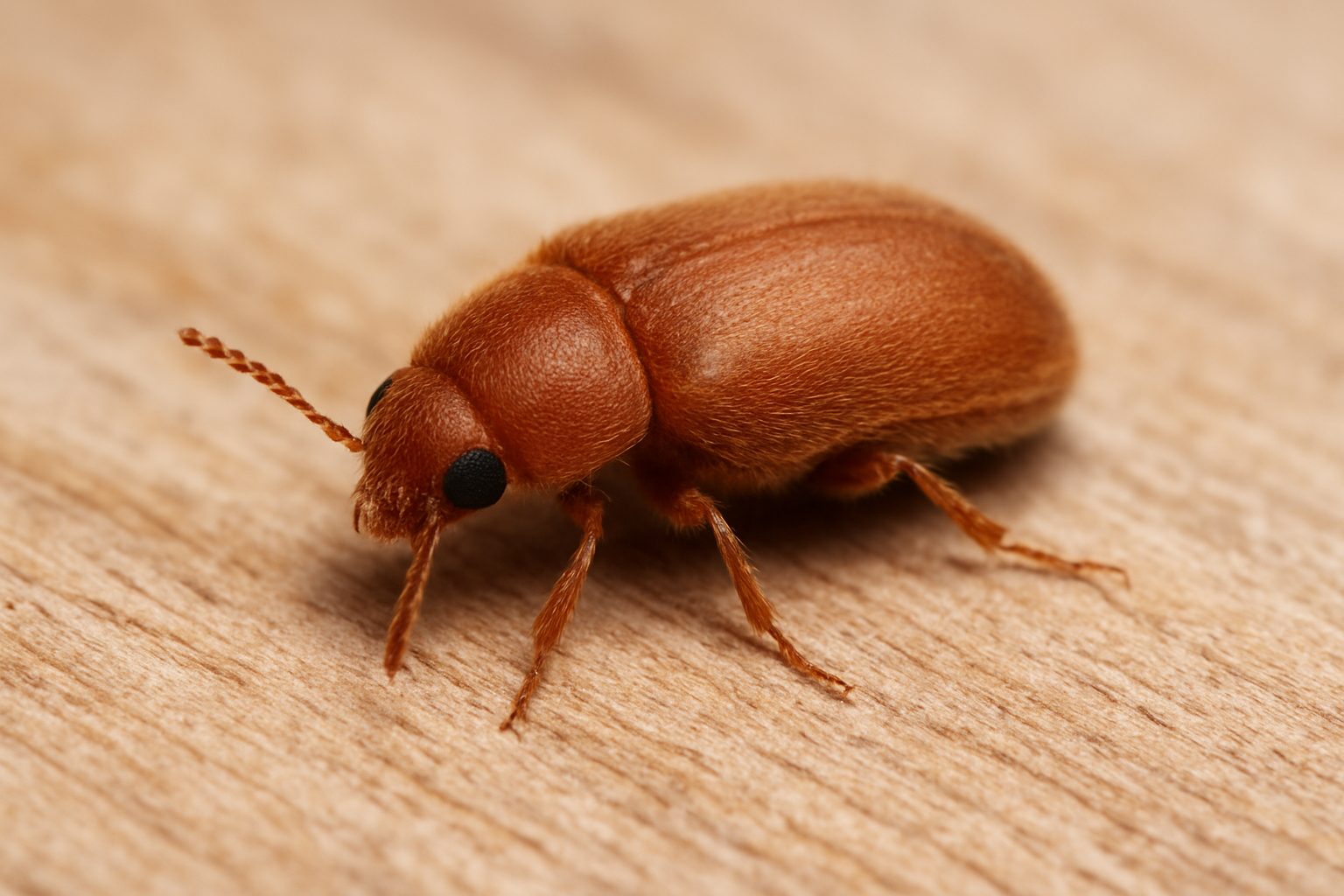
Most people who spot a tiny brown beetle scurrying across their pantry shelf assume it flew in through an open window. A seasonal visitor. A harmless coincidence. In reality, that small insect—the cigarette beetle—is one of the most persistent stored-product pests found in homes, warehouses, and commercial food storage facilities around the world.
Contents
- What Exactly Is the Cigarette Beetle?
- What Do Cigarette Beetles Feed On?
- Where Do Cigarette Beetles Come From?
- Understanding the Cigarette Beetle Life Cycle
- How to Identify an Active Cigarette Beetle Problem
- The Most Common Mistakes When Dealing With Cigarette Beetles
- How to Eliminate a Cigarette Beetle Infestation: A Five-Step Process
- Step One: Locate All Contaminated Material
- Step Two: Remove and Dispose of Affected Products
- Step Three: Clean the Storage Space Thoroughly
- Step Four: Improve Storage Methods
- Step Five: Monitor for Continued Activity
- When to Seek Professional Pest Control Assistance
- Preventing Cigarette Beetles From Returning
- Frequently Asked Questions About Cigarette Beetles
- Do cigarette beetles bite humans?
- Can cigarette beetles damage wood or furniture?
- How long does it take to eliminate a cigarette beetle infestation?
- Are cigarette beetle traps effective?
- Can a clean home still get cigarette beetles?
Understanding what this pest is, where it comes from, and how to address it properly makes the difference between a one-time problem and a recurring infestation that keeps coming back no matter how many times you clean.
What Exactly Is the Cigarette Beetle?
The cigarette beetle (Lasioderma serricorne) is a small, reddish-brown beetle that belongs to the family Anobiidae. It gets its common name from its historical association with stored tobacco products, though its feeding habits extend far beyond cigarettes and cigars.
Adult cigarette beetles measure roughly 2 to 3 millimeters in length. Their body shape is oval and somewhat rounded, and their head is partially concealed beneath the pronotum when viewed from above. The overall appearance is compact and smooth, which makes them easy to mistake for other small flying insects.
They are capable of flight, which explains why you might spot them near light sources, windows, or moving through open spaces in your home rather than always inside a food package.
What Do Cigarette Beetles Feed On?
The feeding range of cigarette beetles is broader than most people expect. Common targets include:
Dry grains and cereals — rice, oats, wheat flour, cornmeal
Spices and dried herbs — paprika, chili powder, dried bay leaves, coriander
Tea leaves and dried botanicals — loose-leaf teas, dried flowers, potpourri
Traditional herbal medicines — dried roots, bark, powdered plant materials
Pet food and animal feed — dry kibble, bird seed, reptile food
Nuts and dried fruits — almonds, raisins, dried apricots
Baking ingredients — cocoa powder, dried yeast, biscuit mixes
Tobacco products — cigars, pipe tobacco, cigarette packaging
This wide dietary range explains why cigarette beetle infestations can appear in unexpected locations—not just in the kitchen, but in storage rooms, garages, and commercial food warehouses.
Where Do Cigarette Beetles Come From?
One of the most common questions homeowners ask is why cigarette beetles appear even in clean, well-maintained spaces. The answer often surprises people: cleanliness has very little to do with it.
Cigarette beetles most frequently enter homes through contaminated products. Eggs or larvae may already be present inside a bag of flour, a spice packet, or a container of pet food before it even reaches the store shelf. Once that product enters a warm indoor environment, the development cycle continues undetected until adult beetles begin emerging.
Common entry points include:
Grocery items with compromised packaging — small holes, loose seals, or damaged containers
Bulk purchases stored for extended periods — large bags of grain, feed, or spices that sit unopened for months
Secondhand goods — antique books, dried flower arrangements, or vintage tobacco items
Neighboring infested spaces — warehouses, storage units, or adjacent commercial food areas
The important takeaway is that an infestation does not reflect poor hygiene. It reflects an undetected introduction of contaminated material into an environment where conditions support development.
Understanding the Cigarette Beetle Life Cycle
Knowing how cigarette beetles reproduce is essential for treating infestations effectively. The life cycle consists of four stages: egg, larva, pupa, and adult.
The larval stage is where the real damage occurs. Larvae feed continuously on stored organic material, tunneling through packaging, leaving behind frass (fine powdery excrement), shed skins, and physical damage to the food itself. This stage can last several weeks depending on temperature and food availability.
Adults, by contrast, have a relatively short lifespan and do not feed as aggressively. Their primary purpose is reproduction. A single female can lay a significant number of eggs across her lifetime, and under warm conditions, multiple generations can develop within a single year.
This is why infestations often seem to escalate suddenly. The adults spotted flying around the kitchen represent only the visible tip of a much larger hidden population. Larvae may still be feeding and developing inside storage containers, behind cabinet walls, or deep within a bag of pet food.
How to Identify an Active Cigarette Beetle Problem
Recognizing a cigarette beetle infestation early makes elimination far more manageable. Watch for these signs:
Presence of adult beetles — Small reddish-brown beetles found near pantry shelves, window sills, or light sources
Fine powdery debris — Frass accumulating inside or beneath food packages, indicating active larval feeding
Small exit holes in packaging — Pinhole-sized punctures in cardboard boxes, plastic bags, or paper wrappers
Shed larval skins — Pale, papery casings found inside storage containers or in cabinet corners
Clumped or discolored food — Grain or spice products with an unusual texture, odor, or visible insect fragments
If any of these signs appear in a pantry or storage area, a thorough inspection should begin immediately rather than waiting to see whether the problem resolves on its own.
The Most Common Mistakes When Dealing With Cigarette Beetles
Many people respond to their first cigarette beetle sighting in ways that address symptoms rather than the source of the problem. Here are the most frequent errors:
Spraying insecticide without locating the source — Surface sprays reduce adult activity temporarily, but larvae and eggs inside food packages remain completely unaffected. Unless the contaminated material is removed, new adults will continue to emerge.
Discarding only the most obviously affected item — A single contaminated package rarely means only that package is affected. Any product stored nearby, especially those in the same cabinet or of the same type, warrants inspection.
Relying on natural deterrents alone — Essential oils, cedar blocks, and herbal sachets may have minor repellent properties, but they do not eliminate an established population or address existing eggs and larvae.
Assuming the problem is resolved once adults disappear — A temporary reduction in visible beetles does not confirm elimination. Larvae may still be developing, and a new generation of adults will emerge weeks later.
How to Eliminate a Cigarette Beetle Infestation: A Five-Step Process
Effective treatment requires a structured approach rather than a single reactive measure.
Step One: Locate All Contaminated Material
Start from the area where adult beetles are most frequently observed and work outward. Check every food item in that zone, particularly those stored in paper, thin plastic, or cardboard. Do not limit the search to items that look obviously damaged.
Step Two: Remove and Dispose of Affected Products
Any product showing signs of infestation should be sealed in a plastic bag and discarded. For items where infestation is uncertain, placing them in a sealed bag and freezing for several days can kill eggs and larvae without wasting the product.
Step Three: Clean the Storage Space Thoroughly
Vacuum cabinet interiors, shelf edges, and corners to remove debris, shed skins, and any remaining food particles. Pay particular attention to gaps, hinges, and cracks where eggs may have been deposited. Follow vacuuming with a wipe-down of all surfaces.
Step Four: Improve Storage Methods
Transfer remaining dry goods into hard-sided airtight containers. Glass jars, rigid plastic containers with secure lids, and sealed metal canisters all significantly reduce the risk of re-infestation by preventing adult beetles from accessing food and laying eggs.
Step Five: Monitor for Continued Activity
Even after a thorough cleanup, ongoing monitoring is essential. Pheromone-based monitoring traps, specifically designed for cigarette beetles, help detect residual activity and confirm whether the infestation has been fully resolved. These tools are particularly valuable in larger spaces such as warehouses, commercial kitchens, and storage rooms where visual inspection alone is insufficient.
When to Seek Professional Pest Control Assistance
Some situations call for expertise beyond what a standard DIY approach can provide. Consider professional evaluation if:
Adult beetles continue to appear for several weeks after self-treatment
The affected area spans multiple rooms or storage zones
The space involved is commercial, such as a food storage facility, warehouse, or feed supply area
Previous treatment attempts have not produced lasting results
Professional pest management specialists can identify infestation hotspots that are not immediately obvious, assess the full scope of the problem, and implement monitoring strategies designed to prevent recurrence.
Preventing Cigarette Beetles From Returning
Long-term prevention centers on a few consistent habits:
Inspect products before storing them, especially bulk purchases and items with damaged packaging
Rotate stock regularly, using older products first and avoiding long-term accumulation of dry goods
Store all susceptible items in airtight containers rather than original packaging
Inspect storage areas periodically, even when no visible beetles are present
Use monitoring tools proactively in high-risk environments to detect activity before it escalates
Frequently Asked Questions About Cigarette Beetles
Do cigarette beetles bite humans?
No. Cigarette beetles do not bite or sting. Their impact is limited to contamination of stored food and dry goods.
Can cigarette beetles damage wood or furniture?
No. Cigarette beetles are not wood-boring insects. They focus exclusively on dry organic matter, particularly food products and plant-based materials.
How long does it take to eliminate a cigarette beetle infestation?
The timeline varies depending on how widespread the infestation is. After removing contaminated material and cleaning the space thoroughly, continued monitoring for several weeks is recommended to confirm resolution.
Are cigarette beetle traps effective?
Pheromone traps are highly effective as a monitoring tool. They help detect the presence of adult beetles, track population levels, and confirm whether treatment has been successful—but they work best as part of a broader control strategy rather than a standalone solution.
Can a clean home still get cigarette beetles?
Yes. Cigarette beetles almost always enter through contaminated products rather than through unsanitary conditions. Proper inspection of incoming goods and airtight storage practices are the most reliable preventive measures.
Key Points
- The cigarette beetle (Lasioderma serricorne) is a common stored-product pest found globally, identifiable by its small, reddish-brown, oval body that measures 2 to 3 millimeters in length.
- Cigarette beetles feed on a wide variety of organic materials including dry grains, spices, teas, traditional herbal medicines, pet food, nuts, dried fruits, and tobacco products.
- Infestations often occur when contaminated products containing eggs or larvae are brought into homes, regardless of cleanliness, as they may already be present within food packaging before purchase.
- The cigarette beetle’s life cycle includes four stages: egg, larva, pupa, and adult, with the larval stage causing significant damage to stored materials.
- Early signs of a cigarette beetle infestation include the presence of adult beetles, fine powdery debris (frass), small exit holes in packaging, shed larval skins, and discolored food products.
- Common mistakes in dealing with cigarette beetles include using insecticides without addressing the source of the infestation and discarding only visibly affected items without checking other products.